The situation
The monitoring tools the company plans to introduce
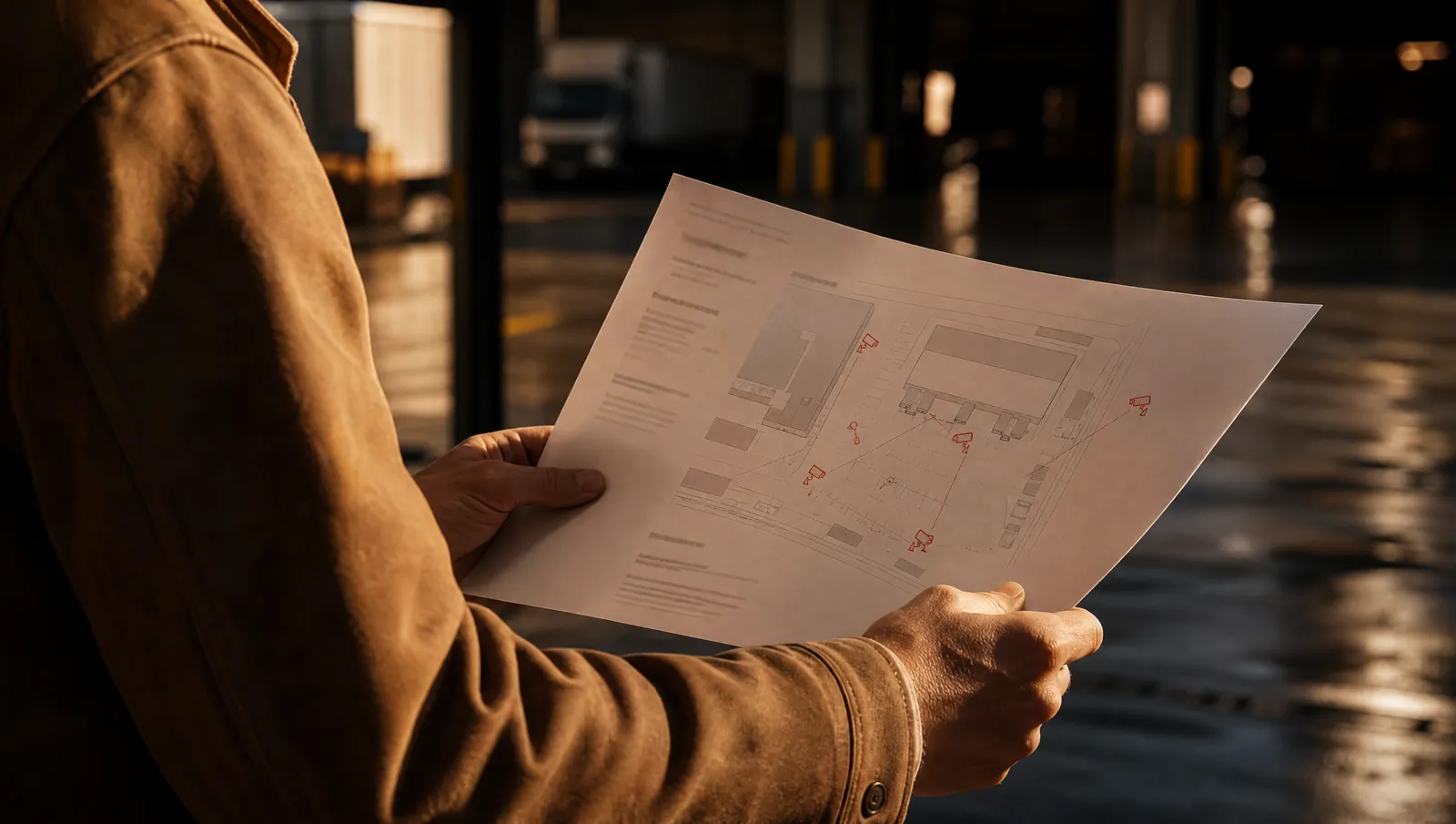
A logistics company with depots in Dortmund and Łódź wants to add cameras in the loading areas, GPS tracking on its vans and a tool that flags unusual downloads from its systems. Operations has picked the vendors. The HR lead has to say what is lawful in each country, what must happen before switch-on, and what employees must be told.
Each tool raises the same questions with different answers: the purpose, whether it is necessary, who must be told or asked, and how long the data may be kept. In both countries the courts have filled in what the statutes leave open, so the decisions matter as much as the text.
What the research has to settle
The rules behind the answer
- Germany: the works council has a say
- Introducing technical equipment capable of monitoring employees’ behaviour or performance requires the works council’s agreement where one exists. That applies whether or not monitoring is the purpose of the tool.
- Germany: check the legal basis under the GDPR
- In C-34/21 the Court of Justice held that national rules on employee data must meet the GDPR’s specific requirements for employment rules. That has put the German general clause on employee data in question, so check the basis for each processing under the GDPR itself.
- Poland: the Labour Code sets conditions
- Polish labour law allows video monitoring only for listed purposes, such as employee safety and protection of property, limits the retention of recordings to three months, and requires employees to be told at least two weeks before monitoring starts.
- Proportionality runs through both
- Monitoring must be necessary for its purpose and the least intrusive option available. Covert monitoring is the exception and needs a specific suspicion, documented before it starts.
How it runs in azta
From the question to the document
The question, as you would type it
German logistics company with a works council wants to install GPS trackers in delivery vans, active during working hours only. What is the legal basis under the GDPR and German law, what are the works council’s rights, and how have the labour courts treated GPS tracking of drivers?
You start with
The monitoring tools the company plans to introduce
- 01
Describe each tool
Give what each tool records, where, when and for what purpose. azta searches the GDPR, German works-council and data protection law and the Polish Labour Code.
Cited research· Free - 02
Find the decisions
Ask for decisions on cameras, vehicle tracking and IT monitoring. azta searches German and Polish case law and the Court of Justice, and links each decision to the full text.
Case-law search - 03
Draft the note
Ask for a note per tool and per country: lawful purpose, conditions, what must happen first. Edit it in Canvas.
Canvas · Ask azta· Pro - 04
Export for the works council
Export to Word as the basis for the works-council negotiation and the DPO’s review.
Word export· Pro You send
A note on what each tool may do, what must happen first, with the case law
What you get
A note on what each tool may do, what must happen first, with the case law
Internal note · draft
Monitoring tools at the Dortmund and Łódź depots
Cameras in loading areas. In Germany, the cameras need an agreement with the works council setting the areas covered, the purpose and the retention period. In Poland, the purposes are protection of property and employee safety; recordings are kept for no more than three months and employees are told at least two weeks before the cameras go live.
GPS on vans. Tracking during working hours for route planning and theft protection can be justified in both countries if it stays within that purpose. Tracking outside working hours, or for ranking individual drivers, is not proposed and should be excluded in the configuration. The decisions found on driver tracking are summarised in Annex 1.
Download alerts. This tool processes behavioural data on all staff. It should have a data protection impact assessment before it is switched on and, in Germany, the works council’s agreement. We recommend starting with a narrow rule set and reviewing it after three months.
Outcomes on your numbers
What azta is worth on this task
Pro pays for itself after
20 minutes a month
At €85 an hour, that is all the time Pro (€27 a month) has to take off your desk to cover its price.
Example figures. Replace them with your own.
- Hours back a year
- 25
- Capacity at your rate
- €2,142
- More monitoring assessments a quarter
- 0.8
- Return on Pro
- 6.6×
- Research
- Drafting
- Your review
A scenario you set, not a promise. The hours that come back go to another client, or deeper into this one.
Want these numbers on your team’s real workload?
Book a demoSources azta searches here
- Gesetze im Internet
- Rechtsprechung im Internet
- Dziennik Ustaw
- SAOS
- EUR-Lex · Curia
What stays with you
- The technical configuration of each tool.
- The negotiation with the works council.
- The DPO’s review and the impact assessment.
Frequently asked questions
- Does azta hold data protection authority guidance?
- azta holds EDPB material and national legislation, but not every national authority’s guidance. The source register lists what is included.
- Can it compare both countries in one note?
- Yes. Ask about both and azta cites each country’s law and decisions separately.
- Does azta configure the tools?
- No. It sets out what the law allows and what must happen first. Configuration stays with your IT team and the vendors.